In Person and Zoom Event
From all Parts: Newman and Education Today
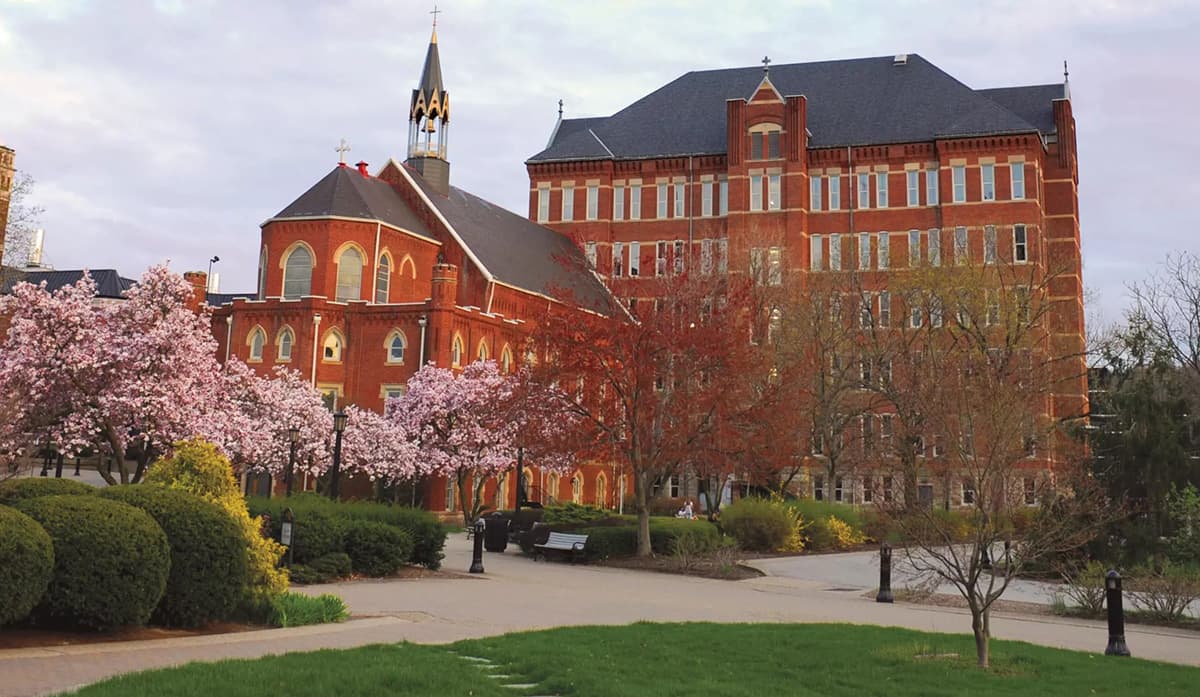
A two-day symposium on St. John Henry Newman and the future of education, October 13–14, 2026, at the Gailliot Center for Newman Studies and on Zoom.
October 13-14, 2026 · Gailliot Center for Newman Studies & Zoom
Join the National Institute for Newman Studies and Duquesne University on Tuesday, October 13 and Wednesday, October 14, 2026 for the NINS Fall Symposium, a two-day gathering on what St. John Henry Newman — newly named Doctor of the Church and co-Patron of Education — offers education today. Keynote speaker Brian D. Robinette (Boston College) argues that the greatest threat to the university today is the erosion of its contemplative spirit, and outlines the dispositions needed to renew it. He is joined by Michael Krom (Saint Vincent College) on Newman as co-patron of education and Leo XIV's call to lead students out of "the encircling gloom of nihilism"; Rebekah Lamb-Varela (University of St Andrews) on Newman's understanding of literature and the power of speech as a gift; and Kenneth L. Parker (Duquesne University) on the Catholic Studies movement and the future of Newman's Idea of a University.
Speakers
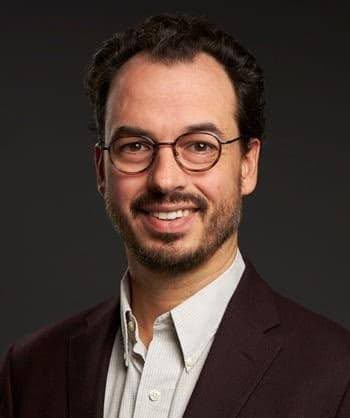
Brian D. Robinette
Keynote Speaker
Boston College
The Contemplative Imperative: University Education and the Recovery of Wholeness
This lecture maintains that the greatest threat to university education today is the erosion of its contemplative spirit. In an age compulsively driven by productivity, our capacities for dwelling in wonder, engaging in play, embracing paradox, and apprehending wholeness are undermined. Such contemplative ways of being, including the path of “learned ignorance,” are essential to our humanity, and outside of religion, no institution is more crucial in cultivating them than the university. Yet, under the grip of technocratic priorities, the university struggles to express these values—and worse, is becoming part of the problem through ideological capture and a growing focus on instrumental outcomes. In response, this lecture outlines key dispositions for renewing the contemplative vocation of university education.
Brian D. Robinette is Professor of Theology at Boston College. After receiving his PhD from the University of Notre Dame in 2003, he taught at Saint Louis University for nine years before moving to the Boston area. He researches and teaches in the areas of systematic, philosophical, and spiritual theology, with special interests in theologies of creation, the doctrine of God, mimetic theory, phenomenology, and mysticism. He has published numerous academic articles, book chapters, and essays. He is also the author of two books: Grammars of Resurrection: A Christian Theology of Presence and Absence (Crossroad, 2009) and The Difference Nothing Makes: Creation, Christ, Contemplation (Notre Dame Press, 2023). He is currently writing a book in Christian spirituality, tentatively entitled Letting Creation Happen: An Experiment in Christian Mysticism.
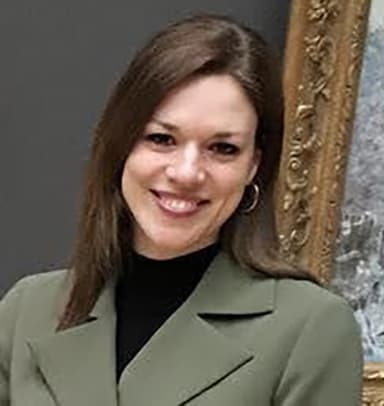
Rebekah Lamb-Varela
Speaker
University of St. Andrews (Scotland, United Kingdom)
“[T]he power of speech is a gift”: Newman on Literature as Edification
Newman has reached readers across countries and cultures through, as Ratzinger once put it, his “prolific pen.” Newman himself humbly prayed that his writing would have this kind of effect, though not until after his death. While his literary influence profoundly shaped his own time, it has continued to grow through the twentieth century and into the present day and played a major part in his recent elevation to Doctor of the Church. This talk explores the degree to which Newman understands language, and especially the literary, as a “gift” especially suited to the edification of the human person. It also considers his cautious view of the arts and his understanding that they can all too easily become idols rather than icons. Lamb-Varela argues that it is through a detached aesthetics (one which Newman aimed to cultivate in himself and others) that we can discern the value of the literary without falling into either a hermeneutic of suspicion or an over-confidence in art’s capacity to replace the “religious sense.”
Dr. Rebekah Lamb Varela is a Lecturer (Assistant Professor) in Theology and the Arts at the University of St. Andrews (Scotland, United Kingdom), the Director of Undergraduate Teaching in the School of Divinity, and a staff member of The Institute of Theology, Imagination and the Arts (ITIA). Prior to joining St. Andrews, she was an inaugural Étienne Gilson Post-Doctoral Fellow at the University of Toronto. She specializes in religion and literature in late modernity, with an emphasis on the relationships between aesthetics, ethics, and formation. With the support of an RSE Collaboration Grant, Rebekah is co-editing the first Oxford Handbook of Catholic Women Writers and her book, Redressing Discontents: Joy and Hope in Late Modern Writing, is forthcoming in 2026 with McGill-Queens University Press. This book significantly features Newman’s theology of joy, especially as expressed through his emulation of St. Philip Neri. Rebekah’s recent publications include articles on Newman’s eschatological view of art (Nova et Vetera), his Marian understanding of history (Religion and Literature), and various articles, encyclopedia entries, handbook and companion entries, and book chapters in The Journal of Pre-Raphaelite Studies, The Palgrave Encyclopedia of Victorian Women’s Writing, New Blackfriars, Theology in Scotland, Gerard Manley Hopkins in Context, Magnificat, Church Life Journal, and elsewhere. Rebekah is a trustee of the Christian Heritage Centre (CHC) at Stonyhurst and also serves on the editorial board of CTS Academic.
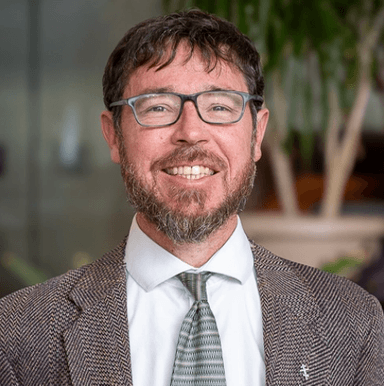
Michael Krom
Speaker
Saint Vincent College
Lead Kindly Light: Newman as Co-Patron of Education
In Pope Leo XIV’s All Saints’ Day 2025 homily announcing St. John Henry Newman as Doctor of the Church and “co-Patron of the Church’s educational mission,” he pointed to Newman’s hymn “Lead, Kindly Light” as a point of reflection for Christian educators. Specifically, he indicates that this hymn can help us “work together to set humanity free from the encircling gloom of nihilism.” As Leo XIV proclaims, today we need to offer an education focused on this Kindly Light so as to lead students out of “the shadows of pessimism and despair” that predominate in the dehumanizing culture of the information age. Further, the Holy Father indicates that Newman’s insights into both the theory and practice of education were central to his mission, and so he is appropriately designated as a co-patron of education. In this talk, I will articulate what Newman, alongside his fellow co-patron St. Thomas Aquinas, has to offer to those tasked with the implementation and reform of Catholic higher education.
Michael Krom is Director of Benedictine Leadership Studies and Chair of Philosophy at Saint Vincent College. He is currently working on two research projects, one on the intersection of Newman’s educational vision and Benedictine spirituality, and another on the application of just war principles to the use of drones and AI in combat. Recent publications include “Newman Against and For the Idea of a Benedictine College” (Newman Studies Journal), “The Footsteps of St. Benedict: Listening to God in the Great Outdoors” (American Benedictine Review), and “Archbishop Anselm, Benedictine Spirituality, and the Challenge of Worldly Wealth” (The Saint Anselm Journal).
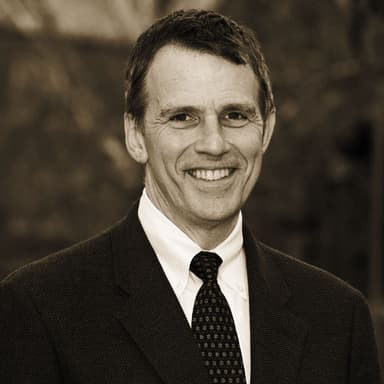
Kenneth L. Parker
Speaker
Ryan Endowed Chair for Newman Studies Duquesne University
The Catholic Studies Movement and Newman’s Idea of a University
Over the last three and a half decades, a movement in American higher education has emerged, which seeks to implement key elements of St. John Henry Newman’s Idea of a University. This presentation will explore this development and its prospects for the future.
Kenneth Parker completed his Ph.D. at the University of Cambridge in 1984, under the direction of Professor Eamon Duffy. His research interest in John Henry Newman began during his post-doctoral studies at the University of Fribourg in the late 1980s. Dr. Parker has taught at the University of Alabama and Westmont College, and served in the historical theology Ph.D. program at Saint Louis University for twenty-five years. In 2014 the College of Arts and Sciences at SLU named him the Steber Professor in Theological Studies. While serving as interim Executive Director at the National Institute for Newman Studies in 2017, Dr. Parker was invited to take up the Ryan Endowed Chair for Newman Studies at Duquesne University. He is author or editor of seven volumes and numerous essays and articles. He has served as Editor of the Newman Studies Journal since 2016. In 2020, Professor Parker became the founding chair of the Catholic Studies Department at Duquesne University. He has also facilitated the emergence of a national network of more than 25 universities and colleges, known as the Catholic Studies Consortium, and has created the Newman inspired “Catholic Studies in Rome” program, in collaboration with the Pontifical Irish College and the Gregorian University.