
Attend in Person or via Zoom Internet
- Attend in person at the Gailliot Center for Newman Studies, 211 N. Dithridge St., Pittsburgh, PA 15213
- Or attend via Zoom Internet from anywhere in the world. A Zoom link will be emailed to registrants prior to the event. For security reasons, all participants will be required to login using the exact name they used during registration.

Newman as Doctor of the Church: Insights and Implications
NINS 2026 Spring Symposium
The last several years have seen St. John Henry Newman’s canonization and now declaration as the thirty-eighth Doctor of the Universal Church. While these developments have in some sense cemented Newman’s legacy for the Church, the recent conferral indicates that Newman’s teaching will continue to guide the faithful as they witness to the gospel amid shifting contexts and facing new challenges.
Through presentations by and conversations with two leading Newman scholars, this symposium explores the historical and theological implications of Newman’s addition to the school of the doctors (schola doctorum) and looks to shed light on how his legacy might inspire and unify Christians the world over.
Tentative Schedule, Thursday, 19 March 2026
Session 1
- 13.00 EDT (17:00 GMT)– Welcome, opening prayer, introductory remarks (Chris Cimorelli)
- 13:15 – 14:00 EDT (17:15 - 18:00 GMT)- Cyril O’Regan (University of Notre Dame), Keynote Address
- 14:00 – 14:30 EDT (18:00 - 18:30 GMT) - Response and Conversation
- 14:30 – 14:45 EDT (18:30 - 18:45 GMT) - Break
Second Paper Session
- 14:45 – 15:30 EDT (18:45 - 19:30 GMT)- Frederick D. Aquino (Southern Methodist University)
- 15:30 – 16:00 EDT (19:30 - 20:00 GMT) - Response and Conversation
- 16:00 EDT (20:00 GMT) - Closing Remarks
Mass and Refreshments (for on-site participants)
- 16:15 – 17:00 EDT - NINS Chapel, Dining Room
Lecture - Thursday, 19 March, 2026. 13:15 – 14:00 EDT (17:15 - 18:00 GMT).
Newman's Prophetic Mission
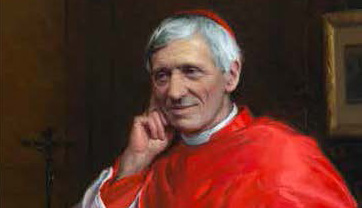
Cyril O’Regan
University of Notre Dame
While Newman does not understand all missions to be prophetic, it seems evident that he understands his mission to be so. This talk focuses on the two interrelated aspects of his prophetic mission, that is, critical intervention and memory of the past that enables Christianity to preserve its identity and move forward through modernity. This is not to deny that one or other of these aspects may be more to the fore in certain texts, nor that relations between these aspects admit of complication in specific texts. The talk has three parts. In part 1, I look at texts of Newman in which one or other of these aspects is very much in the ascent, for example, memory in Lectures on Justification and critique in sermons 9-14 of the Oxford University Sermons. Part 2 teases out the relationship between critical intervention in the Development of Doctrine. Part 3 examines the same relationship in the Grammar of Assent.
Cyril O'Regan was born in Ireland, where he received his BA and MA in Philosophy. He earned his Ph.D. from Yale, where he taught in the Department of Religious Studies before joining the Department of Theology at the University of Notre Dame in 1999. His work spans systematic theology, historical theology, and continental philosophy, with particular expertise at the intersection of theology and continental thought.
O'Regan has produced substantial scholarship on 19th-century theology and philosophy, postmodern thought, mysticism, apocalyptic literature, Gnosticism, and religion and literature. His research includes major Catholic figures such as Newman, Henri de Lubac, Hans Urs von Balthasar, and Benedict XVI, as well as the doctrines of the Trinity and eschatology. He is currently completing two volumes examining the relationship between Swiss theologian Hans Urs von Balthasar and Martin Heidegger, after which he will return to his Gnosticism in Modernity project with planned volumes on Gnosticism and German Idealism, followed by Gnosticism and German and English Romanticism. O'Regan teaches courses across all levels and is actively engaged in directing doctoral students.

Lecture - Thursday, 19 March, 2026. 14:45 – 15:30 EDT (18:45 - 19:30 GMT).
Cultivating an Ecumenical Habit of Mind: A Newmanian Proposal
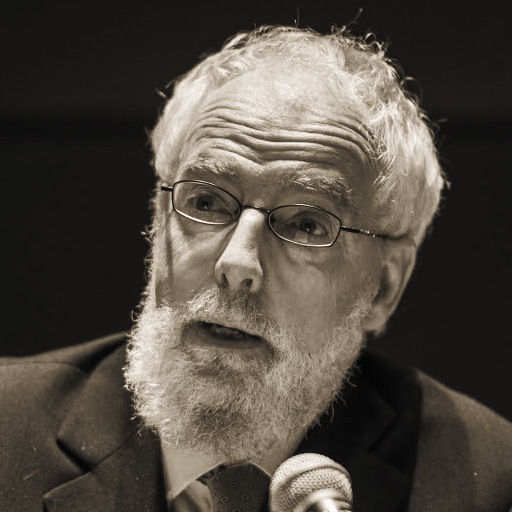
Frederick D. Aquino
Perkins School of Theology, Southern Methodist University
Considering Newman’s elevation as a Doctor of the Church, one way to honor his legacy (or legacies) involves examining critically and appreciatively his life, thought, and significance from different viewpoints. This paper, therefore, explores the relevance of Newman’s thought for ecumenical relations. However, it is not making the historical claim that Newman was an ecumenist. Instead, it draws attention to a possible constructive link between Newman’s concept of a connected view and the cultivation of an ecumenical habit of mind. Thus, forming an ecumenical habit of mind lies not in making facile connections between the past and present. Instead, it involves unpacking the subtleties of Newman’s thought, deciphering the relevant connections, and engaging in rigorous constructive work. This paper will conclude that gleaning insights from others plays a fundamental role in achieving what Newman stipulated as the aim of a connected view—seeing how things fit together in light of one another.
Frederick D. Aquino is Professor of Systematic Theology at Perkins School of Theology, Southern Methodist University. Some of his publications include Communities of Informed Judgment (Catholic University of America Press, 2004), An Integrative Habit of Mind (Northern University Press, 2012), Receptions of Newman (Oxford University Press, 2015), co-edited with Benjamin J. King, The Oxford Handbook of the Epistemology of Theology (Oxford University Press, 2017), co-edited with William J. Abraham, The Oxford Handbook of John Henry Newman (Oxford University Press, 2018), co-edited with Benjamin J. King, and Perceiving Things Divine: Towards a Constructive Account of Spiritual Perception, co-edited with Paul Gavrilyuk (Oxford University Press, 2022), John Henry Newman and Contemporary Philosophy, co-edited with Joe Milburn (Routledge), and John Henry An Essay in Aid of a Grammar of Assent: A Critical Guide, co-edited with Matthew Levering (Emmaus Academic, 2025). He has also published articles and chapters on John Henry Newman, Maximus the Confessor, John Cassian, deification, philosophical receptions of scripture, and religious epistemology. His current project focuses on the relevance of John Henry Newman’s thought for issues in contemporary epistemology.